
Lessons From the Deptford Waste Facility Fire
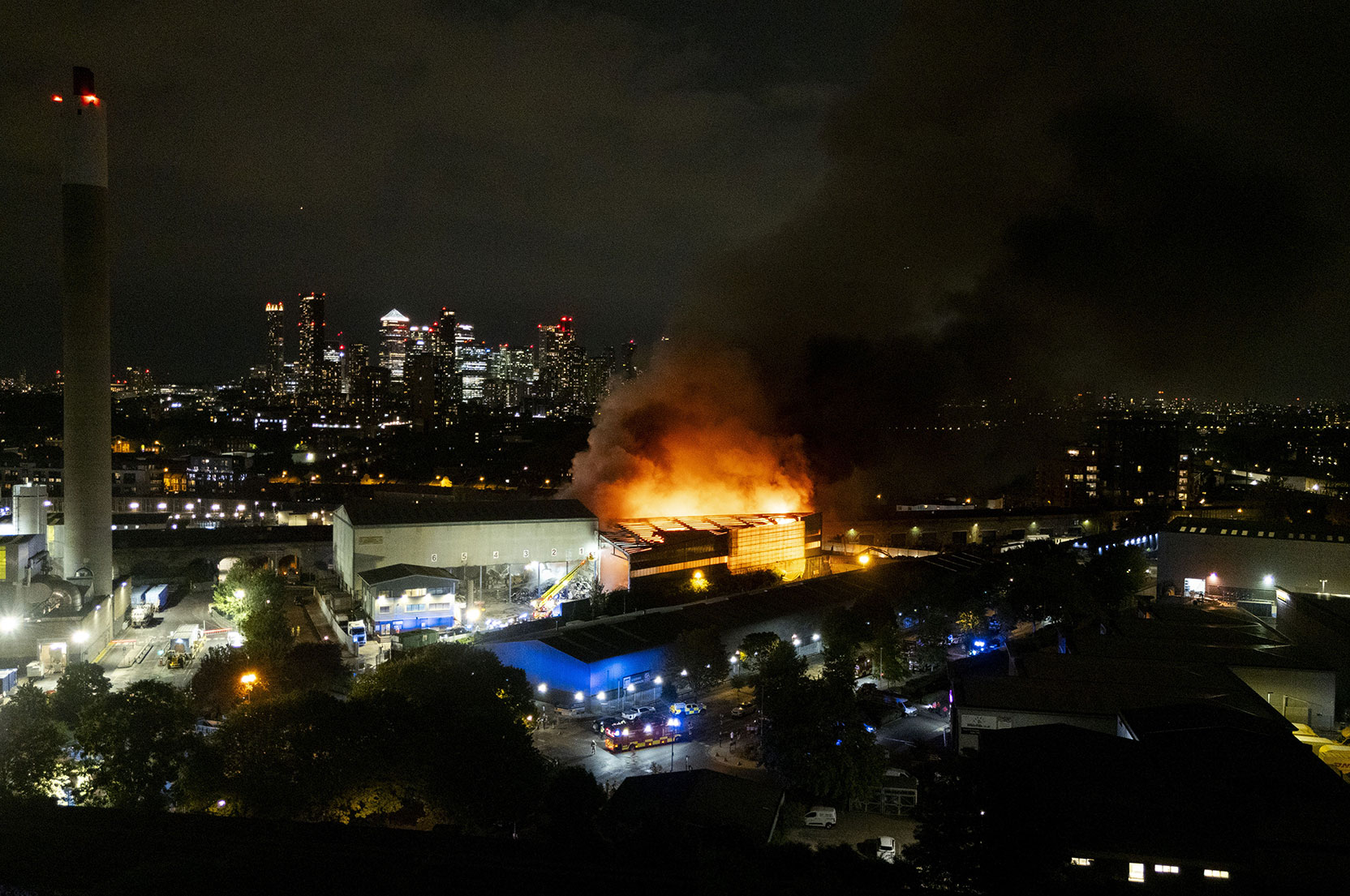
The fire at a waste facility on Landman Way in Deptford provides a recent example. On 18 August 2026, 15 fire engines and around 100 firefighters attended the incident, which involved approximately 50 tonnes of household waste.
The structure of the facility was severely damaged and nearby railway lines were closed as a precaution while crews responded. Firefighters remained at the scene into the following morning as they worked to extinguish remaining pockets of fire and dampen down the site. The cause had not been established when London Fire Brigade published its incident update.
Although the fire occurred at a waste facility, the wider risk-management lessons apply to businesses across many different sectors.
The consequences do not stop at the boundary
Businesses naturally concentrate on protecting their own buildings, machinery, stock and employees. However, the potential consequences of a major incident can extend far beyond repairing the original damage.
If a fire produces significant smoke or requires a large-scale emergency response, nearby roads or railway lines may need to close. Emergency services may restrict access to the surrounding area, while neighbouring occupiers could be required to evacuate or temporarily cease operating.
This can potentially affect:
- Neighbouring businesses and property owners.
- Employees, customers and suppliers.
- Railway, Underground and road networks.
- Nearby homes and public spaces.
- Local utilities and other infrastructure.
- The surrounding environment.
The closure of railway lines during the Deptford response is an important reminder that the severity of an incident is not determined solely by the damage within the affected site.
Could your liability extend further than expected?
A serious incident could result in claims from third parties whose property, operations or wellbeing have been affected.
For example, a neighbouring business may suffer physical damage or lose access to its premises. Smoke or debris could affect nearby property, while fire could spread beyond the original building or site.
This raises an important question for businesses: would the current Public Liability limit of indemnity be sufficient if an incident affected several third parties or important infrastructure?
Many organisations select a liability limit when their policy is first arranged and continue to renew it without considering whether their activities or surrounding environment have changed.
Having insurance in place is important, but the limit must also reflect the possible scale of a serious loss.
Environmental consequences may continue after the fire
Fire is often the most visible part of an incident, but it may be accompanied by less obvious environmental exposures.
Smoke, oils, chemicals, contaminated debris and fire-fighting water can potentially affect drains, waterways, neighbouring land or surrounding communities. Specialist containment, clean-up and remediation may be required, with environmental regulators or other authorities becoming involved.
There is no suggestion that all of these consequences occurred during the Deptford fire. However, the incident provides a useful opportunity for businesses to consider how an event at their own premises might interact with the surrounding environment.
Standard Public Liability Insurance may not respond to every type of pollution or environmental loss. Environmental Liability Insurance should therefore be considered as part of a wider review.
Business interruption without catastrophic property damage
A business does not need to lose its building to experience significant disruption.
Premises may remain physically undamaged but become inaccessible because of a police or fire service cordon. Staff, customers and deliveries may be unable to reach the site, while the closure of a road or railway line could disrupt normal operations.
Businesses should review whether their Business Interruption Insurance appropriately reflects these possibilities. Relevant areas may include denial of access, public authority restrictions, increased costs of working and dependence on important suppliers or customers.
The indemnity period should also reflect how long the business could realistically take to recover, rather than how quickly the physical damage might be repaired.
What can businesses learn from the incident?
The Deptford fire demonstrates why organisations should look beyond their own property boundary when assessing risk.
Businesses should consider:
- What buildings and activities are located nearby?
- Is the site close to a railway line, major road or other infrastructure?
- Could smoke or debris affect neighbouring properties or residential areas?
- How would emergency service restrictions affect access?
- Could fire-fighting water or contaminants escape from the site?
- Are current liability limits based on a realistic worst-case event?
- Could the business operate from another location?
- Is the Business Interruption indemnity period long enough?
A major incident will rarely develop exactly as expected. Considering the wider consequences in advance can help identify weaknesses in insurance protection, emergency planning and business continuity arrangements.
TMD Insurance Group can help businesses review their existing insurance programme and consider whether current limits, values, indemnity periods and policy extensions remain appropriate.
Find out more about our Major Incident Risk & Business Resilience
Sources
London Fire Brigade - Waste fire in Deptford
London Resilience Partnership - Protect Your Business