

The Hidden Environmental Risks of a Major Fire
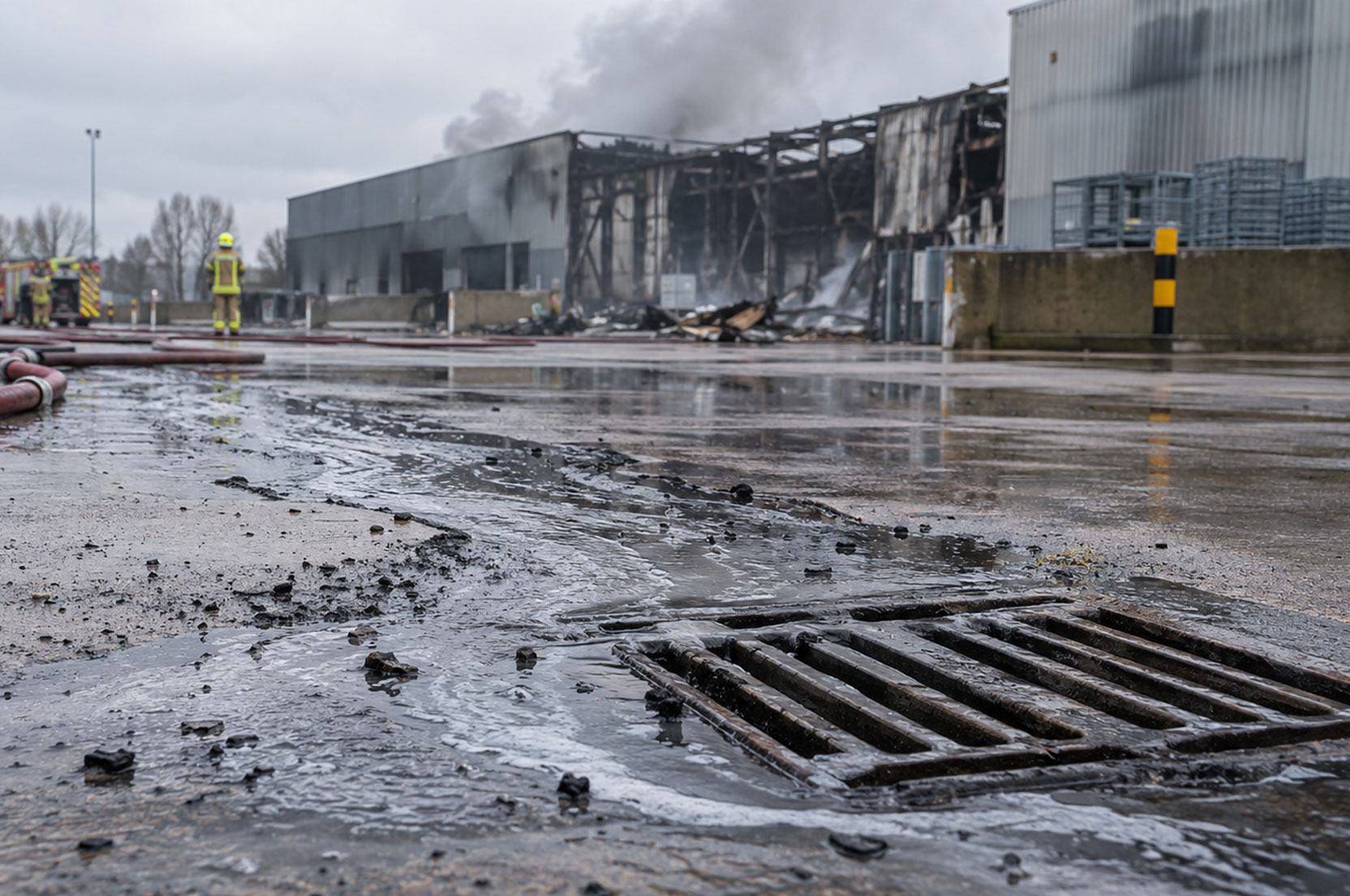
The flames and physical damage caused by a major fire are usually the most immediate concerns. However, the environmental consequences can be equally serious and may continue long after the fire has been brought under control.
Smoke, contaminated debris, chemicals, oils and water used during firefighting operations can all move beyond the affected premises. Depending on the location and materials involved, they may enter drainage systems, watercourses, soil or neighbouring land.
This can result in extensive clean-up work, regulatory involvement, third-party claims and costs that may not be fully covered by a standard Public Liability policy.
Fire-fighting water can carry contaminants off site
Large quantities of water may be required to control a serious fire. Once this water comes into contact with stored materials, fuel, chemicals, waste, machinery or damaged buildings, it may become contaminated.
If suitable containment measures are not in place, the water can leave the site through surface water drains, soakaways or natural run-off. Drainage systems can transport pollution away from a premises very quickly, potentially carrying contaminants into rivers, streams and surrounding land.
Government pollution-prevention guidance explains that surface water drains normally discharge directly into the environment. It recommends that businesses understand where their drains are located, the direction in which they flow and where they eventually discharge.
An up-to-date drainage plan can therefore be particularly valuable during an emergency. It can help employees and emergency responders identify surface water drains, isolate vulnerable areas and take steps to contain polluted water.
Pollution is not limited to obviously hazardous materials
Environmental exposure is sometimes associated only with businesses handling hazardous chemicals or industrial waste. In reality, many everyday substances can cause pollution if they enter the wrong environment.
Government guidance notes that potentially polluting materials can include oils, detergents, food products, waste and other substances that may not initially appear dangerous. Even natural materials can affect water quality or reduce oxygen levels in rivers and streams.
A fire can also cause substances that are normally stored safely to mix together, leak from damaged containers or be carried across a site by fire-fighting water.
This makes environmental risk relevant to a wide variety of organisations, including:
- Manufacturers.
- Warehouses and logistics operators.
- Motor traders and vehicle recovery businesses.
- Retailers holding significant stock.
- Property owners and commercial landlords.
- Waste and recycling facilities.
- Food and drink businesses.
- Agricultural operations.
- Businesses storing fuel, oil, batteries or cleaning products.
The potential environmental impact will depend on what is stored at the site, how it is contained and what lies beyond the property boundary.
Smoke and debris may affect neighbouring areas
Smoke can travel a considerable distance from the source of a fire, depending on the materials involved and prevailing weather conditions.
Nearby businesses or residential areas may be advised to close windows and doors. Premises could require specialist cleaning, while ventilation systems, machinery, stock and other property may be affected even where the flames have not spread.
Burnt materials and damaged structures can also create contaminated debris. This may require assessment, careful handling and disposal at an appropriate facility rather than being treated as ordinary building waste.
A major clean-up could involve environmental consultants, specialist contractors, laboratory testing, drainage inspections and ongoing monitoring. This can make the recovery considerably more complex than simply repairing the visible fire damage.
Who is responsible for the environmental damage?
Businesses have a responsibility to prevent their activities from causing pollution.
The Government’s pollution-prevention guidance warns that organisations may have to pay the full cost of cleaning up pollution, alongside possible compensation to third parties and other financial consequences. It also advises businesses to contact the Environment Agency immediately where polluting materials have entered, or could enter, a watercourse or the ground.
The Environmental Damage Regulations provide a further framework for preventing and remedying certain types of serious environmental damage. The accompanying government guidance is aimed at organisations carrying out activities that could create an imminent threat of environmental damage or cause actual environmental harm.
Depending on the circumstances, an incident may therefore involve the Environment Agency, local authorities, emergency services, water companies and other regulatory bodies.
The resulting investigation and remediation requirements can continue long after the initial emergency response has ended.
Would Public Liability Insurance be enough?
Some businesses assume their Public Liability Insurance will automatically cover the environmental consequences of an incident. However, pollution and contamination cover under a standard policy can be restricted.
For example, cover may apply only where pollution results from a sudden, identifiable and unintended event. Gradual pollution, clean-up of the business’s own site or remediation required by a regulator may not necessarily be included.
Environmental Liability Insurance is designed to address a broader range of environmental exposures. According to the Association of British Insurers, protection can include sudden and gradual pollution, first-party clean-up costs imposed by regulators, third-party liability, nuisance claims and associated legal expenses.
The cover provided will depend on the policy wording, limits, conditions and exclusions. Businesses should therefore review their arrangements carefully rather than assuming all pollution-related costs will be covered.
Preparing for an environmental incident
Insurance should sit alongside practical measures designed to prevent pollution and limit its spread.
Businesses should consider:
- Which materials on the premises could become pollutants during a fire?
- Are chemicals, oils and fuels stored within suitable secondary containment?
- Is there an accurate and accessible drainage plan?
- Do employees know which drains carry surface water?
- Can drains be isolated or protected during an emergency?
- Where would fire-fighting water flow across the site?
- Could contaminated water reach neighbouring land or a watercourse?
- Are spill kits and drain covers available?
- Are specialist environmental contractors identified in advance?
- Does the emergency plan include relevant regulatory and insurance contacts?
- Is existing environmental insurance sufficient for the potential exposure?
Government guidance recommends that businesses storing materials, products or waste that could cause pollution prepare a pollution incident response plan. This can set out the actions to be taken following a leak, spill, fire or other environmental emergency.
Look beyond the flames
A major fire can create a chain of consequences that extends well beyond the original building.
The environmental impact may involve contaminated water, smoke, debris, damage to neighbouring land, regulatory action and an extensive clean-up programme. Without appropriate planning and insurance, these costs can place additional pressure on a business at an already difficult time.
Understanding how pollutants could escape from the site, reviewing containment measures and checking the extent of insurance protection can help an organisation prepare for the less visible consequences of a serious fire.
TMD Insurance Group can help businesses consider their environmental exposures and review whether their existing insurance arrangements provide appropriate protection.
Sources
Department for Environment, Food & Rural Affairs and Environment Agency - Pollution prevention for businesses
Association of British Insurers - Environmental Liability Insurance
Department for Environment, Food & Rural Affairs - Environmental Damage Regulations guidance